In the arid, coastal, and reclaimed geological conditions of the United Arab Emirates, poor subsoil bearing capacity, uncompacted marine fills, and high water tables frequently trigger differential structural settlement, slab voiding, and foundation instability. F L X Building Contracting LLC delivers specialized geotechnical ground engineering, offering non-destructive soil stabilization and ground improvement solutions that permanently restore subgrade load-bearing capacity without costly demolition.
Our engineering division utilizes precision permeation grouting, compaction grouting, and chemical resin solidification. By strategically installing sleeve-port pipes (tubes à manchette) and micro-injection lances, we inject engineered microfine cementitious slurries, silicate resins, or expanding structural geopolymers directly into permeable sand layers, karstic voids, and weak soil strata.
This controlled permeation binds loose granular soil particles into high-strength conglomerates, raising soil bearing capacity by up to 200% while forming an impermeable barrier against groundwater migration. Our methods are ideal for underpinning settling villa compounds, industrial warehouse slabs, commercial towers, marine port quays, and airport runway pavements.
Every ground improvement contract is executed under rigorous QA/QC oversight, including pre-treatment and post-treatment Cone Penetration Testing (CPT), dynamic cone penetrometer (DCP) mapping, and continuous electronic pressure-volume telemetry logging in full compliance with Dubai Municipality and UAE municipal engineering standards.
Controlled low-viscosity microfine cement and sodium silicate resin injection that flows into microscopic soil pore spaces without fracturing soil structure, solidifying loose sands into stable sandstone-like conglomerates.
High-pressure injection of low-mobility, low-slump mortar bulbs that displace and densify surrounding loose soils, filling subsurface cavities and lifting settled slabs back to original architectural design elevations.
Reinforcing ground strata directly beneath active raft foundations, strip footings, and retaining walls experiencing differential settlement or load enhancements for vertical building expansions.
Targeted injection beneath settling warehouse floor slabs, highway approach ramps, heavy machine foundations, and runway pavements to eliminate subgrade voids and restore uniform load transfer.
Strengthening soil mass behind shoring walls, diaphragm walls, and secant piles to halt soil raveling, prevent excessive lateral retaining wall deflection, and seal off subterranean groundwater ingress.
Comprehensive borehole logging, Cone Penetration Testing (CPT), and electrical resistivity surveys to map soil stratification, void locations, and baseline unconfined compressive strengths.
Structural modeling of injection borehole spacing, target injection depths, grout rheology, and pressure-volume limiters calculated against structural dead and live loads.
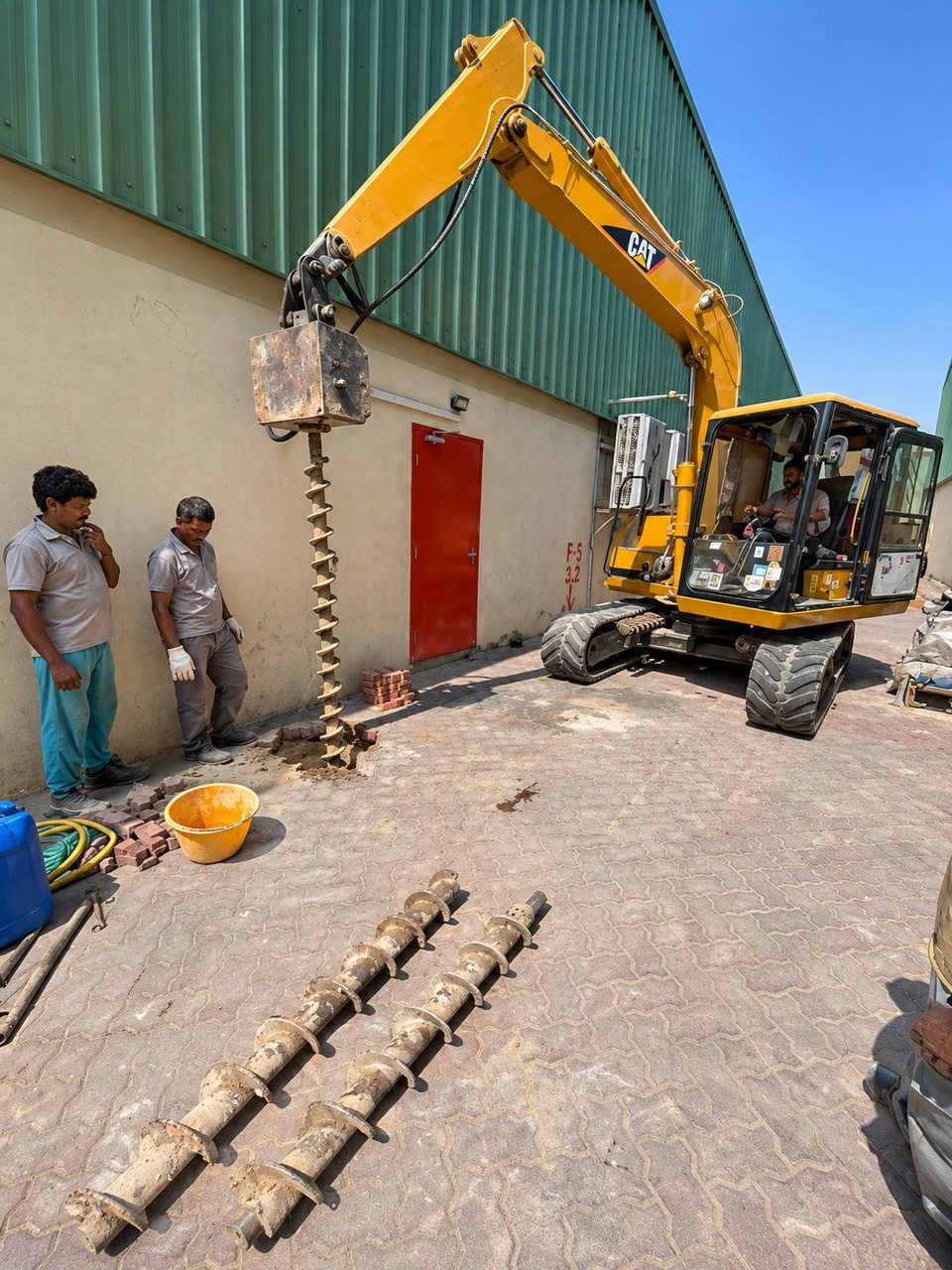
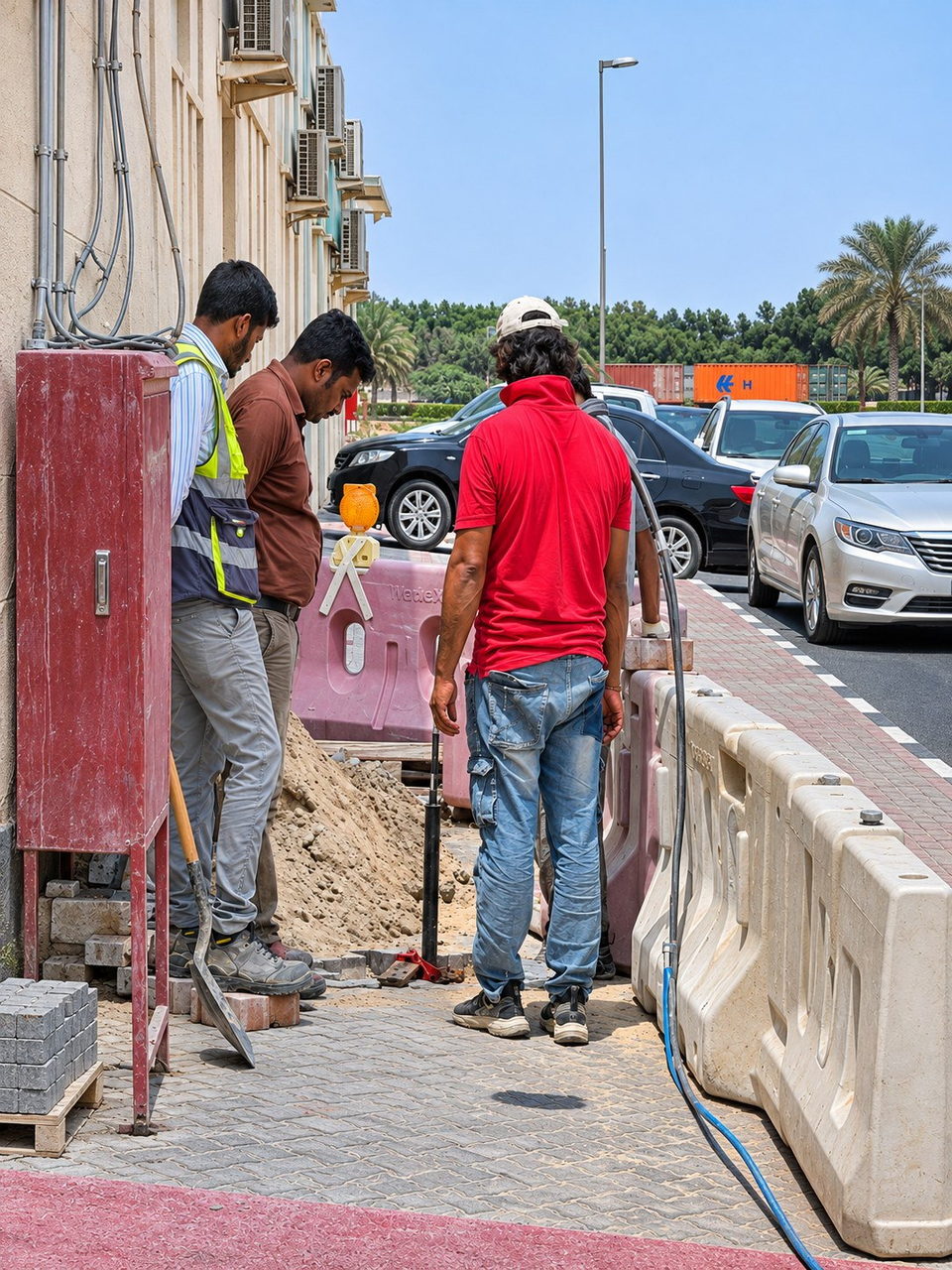
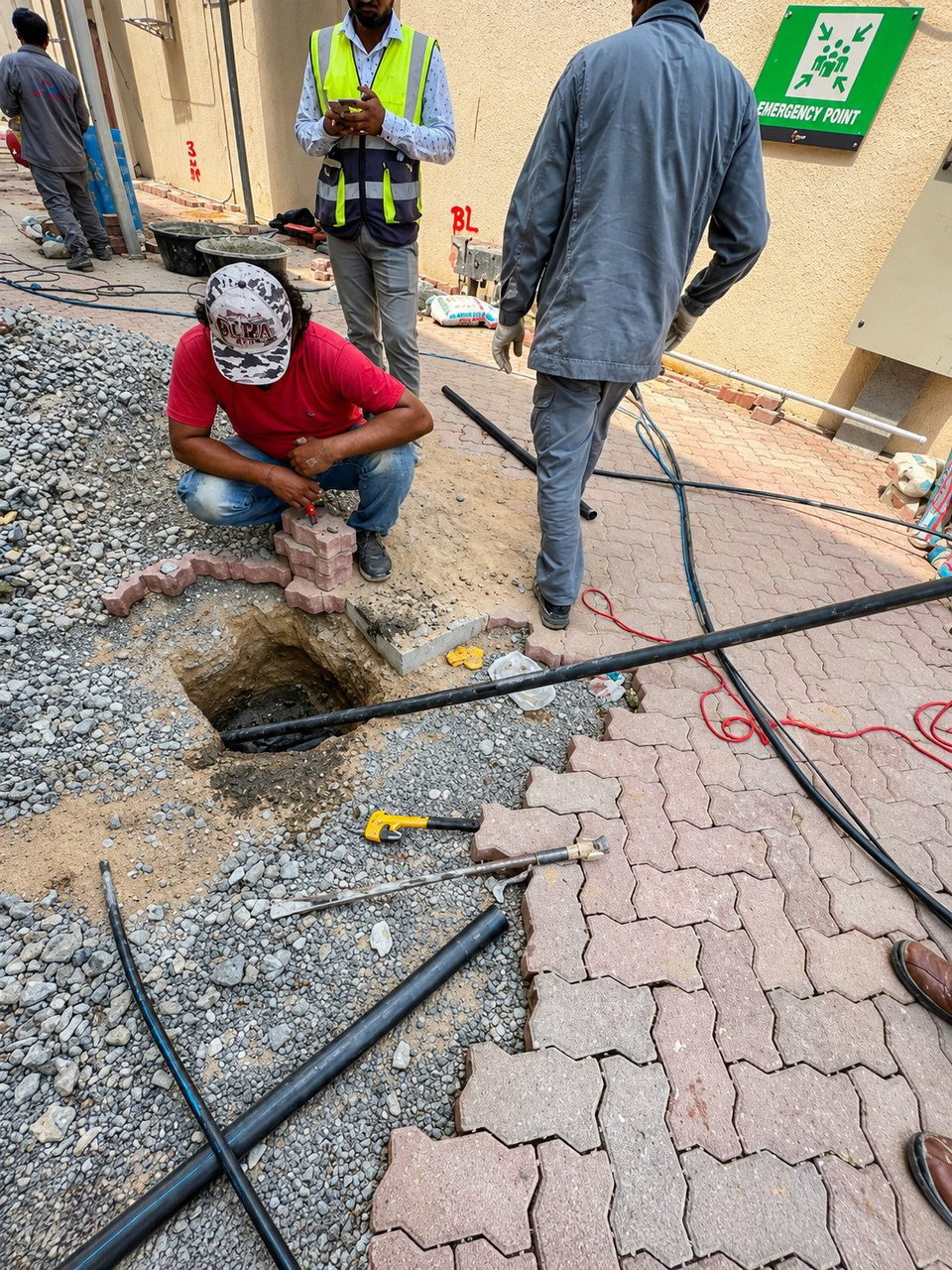
Low-vibration rotary drilling of 50mm–100mm injection holes through slabs or open ground, installing perforated sleeve-port pipes (Tubes à Manchette) with double packers for multi-stage treatment.
High-pressure automated injection of microfine cementitious slurries or chemical resins with real-time digital monitoring of injection pressure, flow rate, and millimeter-precision laser level surveying.
Secondary CPT and plate load testing verifying bearing capacity improvement, followed by hole sealing, core sample lab documentation, and handover of 10-to-15-year warranty dossier.
Direct engineering answers regarding UAE municipal compliance, testing standards, and site execution.
Submit technical parameters for rapid estimation and site inspection.